Thread without panic
Use a repeatable sequence instead of starting again blindly.
Beginner serger and overlocker guidance
Practical guidance for threading, tension and cleaner finishes, written for sewists who want confidence without the confusion.
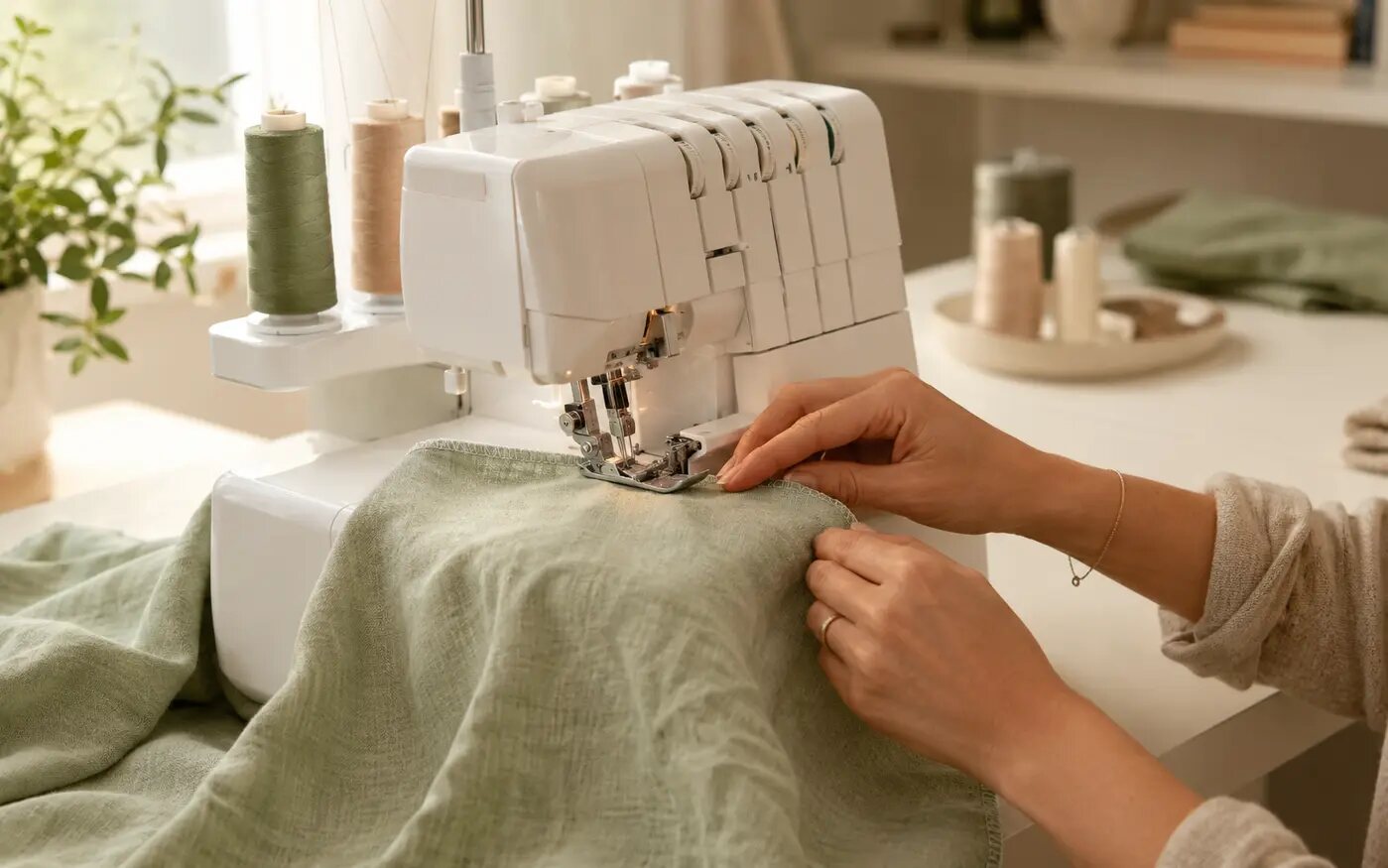
Use a repeatable sequence instead of starting again blindly.
Read the stitch first, then make one controlled change.
Test, label and reuse the settings that work for your fabric.
Your first useful win
Use this before every new fabric or stitch. Always follow the safety and threading instructions supplied with your own machine.
Find the threading diagram for your exact model. Thread paths and looper order vary, so generic instructions should support your manual, not replace it.
On many machines this releases the tension discs, allowing the thread to settle correctly. Confirm the method for your machine before threading.
Thread each guide and looper in the sequence shown by your manufacturer. If one thread breaks, check whether your manual requires a full rethread.
Use two layers of the same fabric as your project. This gives you a reliable place to assess tension, cutting width and differential feed.
Small, recorded adjustments make faults easier to diagnose. Keep the successful settings with a labelled fabric sample for future projects.
Practical learning
Begin with the fault in front of you. These short guides turn a frustrating machine into a series of manageable decisions.
Remove the guesswork with a fixed sequence, good lighting and thread tails long enough to handle comfortably.
Read the practical stepsPhotograph the original thread path before removing anything. Place thread cones in the machine's labelled order, then work through every guide without skipping ahead. Turn the handwheel only in the direction stated by your manufacturer.
The position of each thread gives you information. Identify which thread is moving before changing a tension setting.
Read the practical stepsTest with contrasting thread colours while learning. If loops spill over an edge, identify the corresponding looper thread and make one small adjustment. Return to the manufacturer's baseline whenever several changes make the result worse.
Practise corners, curves and rolled hems on scraps before committing your garment or project fabric.
Read the practical stepsCreate a small sample library with the fabric type, needle, thread, stitch length, cutting width and differential feed written beside each result. This becomes your personal reference for repeatable finishes.
US sergers and UK overlockers
Our review system separates US and UK models, prices, voltage and warranty coverage. Every machine is labelled as hands-on tested, editorially researched or specification-only, so you can see exactly what supports the verdict.
Explore the machine review hubModels, pricing and support intended for US buyers.
Regional models, pricing and support intended for UK buyers.
Approved affiliate partner
A structured beginner course focused on threading, tension, stitch types and practical confidence at home.
How recommendations earn a place
The product must solve a clear and observable sewing problem.
We look for named operators, clear terms and accessible support.
Conversion matters, but low cancellations and credible feedback matter more.
We do not use fabricated urgency, guaranteed results or hidden commercial relationships.
Editorial attribution
The Serger Edge is an independent educational and product research project created to help beginners make better sewing decisions. Stephen Igweh oversees the commercial testing, evidence standards and editorial direction.
Technical guidance is checked against manufacturer instructions and specialist sewing resources. Your machine manual remains the primary source for model-specific threading, maintenance and safety.